Game economies
Skins, materials, keys, and currency: what are you really buying?
Not every virtual good creates value in the same way. Here is a clear map of the most common gaming-item categories and the questions worth asking about each one.
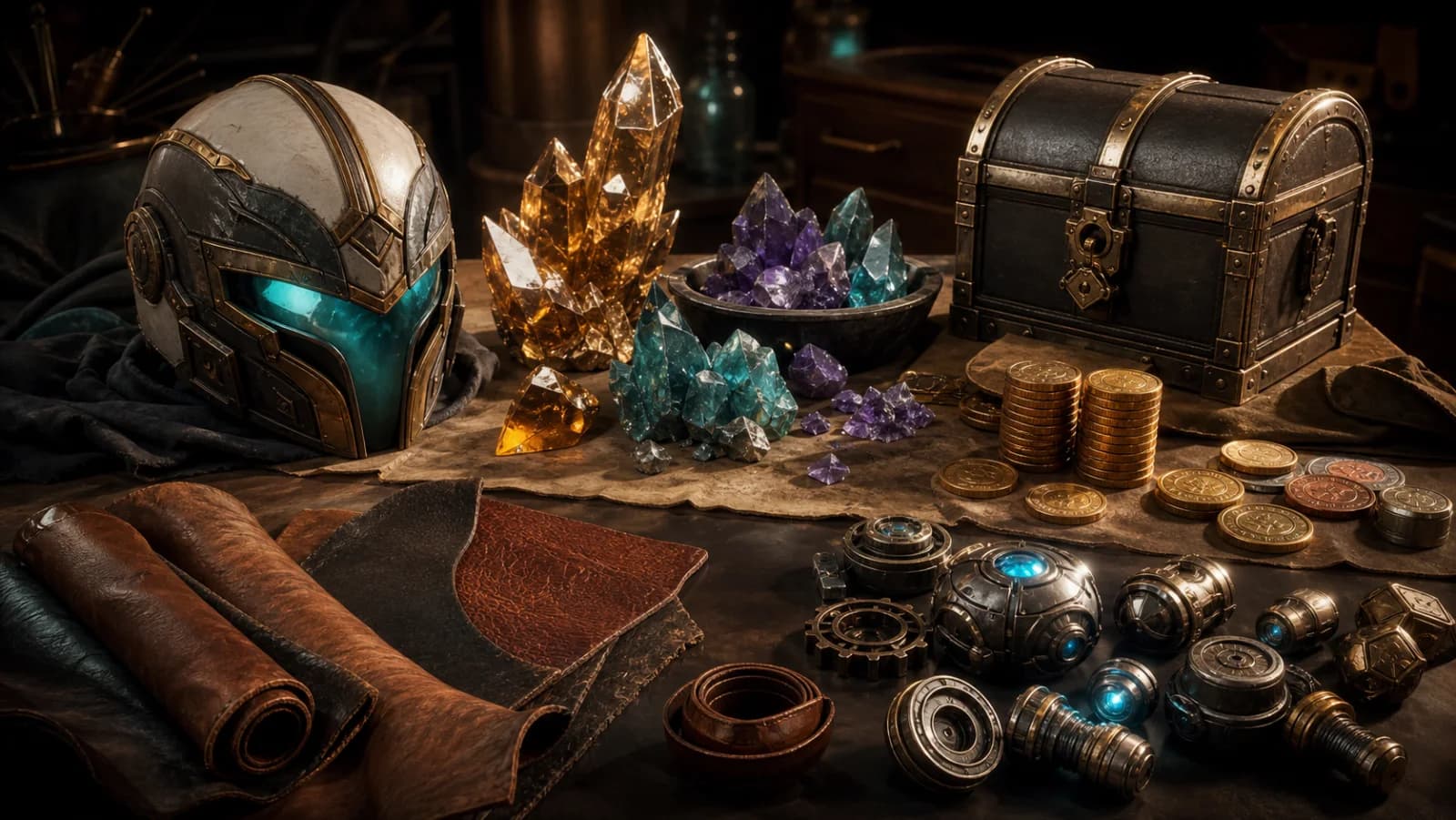
“Gaming item” is a broad label. It can mean a cosmetic that changes how a character looks, a material that saves hours of gathering, a key that opens one chance at a reward, or currency that lets a player choose their own next upgrade. Understanding the category makes it much easier to compare offers.
Cosmetics: identity without progression
Skins, mounts, weapon appearances, emotes, and decorative housing items usually change expression rather than power. Their value comes from design, scarcity, history, and how visible they are during play. Cosmetic prices can move sharply when an item returns to a store or when a new character makes an older skin popular again.
For cosmetics, confirm the exact edition and transfer method. A screenshot should show the item name and relevant pattern, condition, or variant. Do not assume an item is tradable just because it appears in a player inventory; many cosmetics are permanently attached to an account after redemption.
Materials: time stored in item form
Crafting ore, herbs, leather, upgrade stones, and enhancement components turn gathering time into a tradable resource. Their practical value often follows current recipes, progression seasons, and server supply. That makes quantity and location especially important.
- Compare prices using one consistent unit.
- Confirm whether the material is raw, refined, or bound.
- Check the server and faction where delivery will occur.
- Ask whether a large quantity needs more than one trade.
Materials are often purchased in bulk, so a clear unit label is essential. A listing should say exactly what one purchased unit delivers.
Keys and access items: a chance, not a guarantee
Keys, tickets, maps, and entry tokens buy access to an activity or reward pool. Their value depends on what they unlock and on the odds or effort that follow. Treat the key and the possible reward as two separate things. Buying access does not mean buying the rare result you hope to find.
Check whether the access item expires, requires a certain level, or is limited to a particular event. If it is consumed on use, confirm that before comparing it with a permanent unlock.
Currency: flexibility with extra precision
Gold, credits, coins, and other in-game currencies are flexible because the buyer chooses what to purchase later. The tradeoff is that currency listings require very precise quantity language and careful delivery coordination. Confirm the amount, server, region, faction, delivery method, and any marketplace fee inside the game.
The useful comparison is the effective amount you receive, not simply the number in the title. If an in-game auction house takes a fee or the delivery uses a placeholder item, both sides should describe that process before the order starts.
Functional gear: inspect every attribute
Weapons, armor, charms, pets with abilities, and upgrade modules can affect play directly. Their price may depend on level, rolls, sockets, durability, enhancements, or remaining upgrade potential. Small differences matter. A generic product image is not enough for a one-of-one item; ask for current evidence of its attributes.
Choose the category before the listing
Start with the outcome you want. If you want expression, explore cosmetics. If you want to skip repetitive gathering, compare materials. If you want flexibility, currency may make sense. If you want a specific power increase, inspect functional gear in detail.
That simple category decision prevents a common mistake: buying the most exciting offer before deciding whether it solves the actual problem. The best gaming item is rarely the one with the loudest rarity color. It is the one whose value, delivery, and use are clear before you click buy.
A note from the editors
Game rules and item values change. Check the publisher’s current terms and confirm the exact delivery details with a seller before buying.